Photography stays. Videography starts.
In 2026 I’m still shooting street photography and POV sessions, but I’m going deeper into video. At first, video was simply a way to present my photos on YouTube. Now it’s become its own craft I genuinely want to improve, because movement and timing can hit emotion in a different way.
And one piece of gear has already changed how I move and shoot, especially when I’m filming solo: the iFootage Cobra 3 Strike A150S with the Base-P and the Komodo K5S fluid head.
Watch the video review:
Disclosure (keep it transparent)
iFootage provided the Cobra 3 Strike A150S, Base-P, and Komodo K5S for this review and let me keep the kit.
They had zero approval on what I say, and everything below is my honest experience.
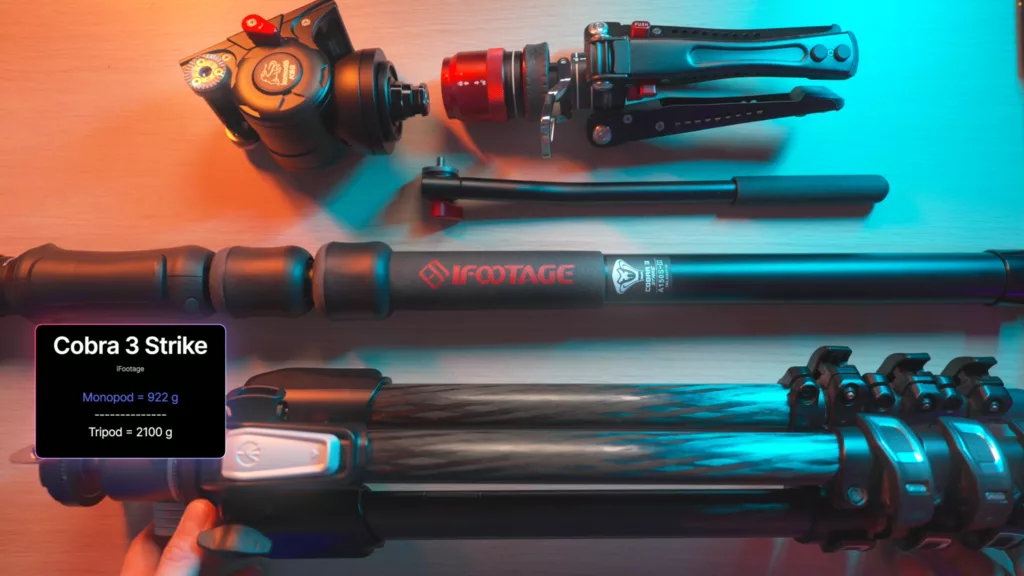
Monopod vs Tripod: What’s the real difference?
A tripod is about maximum stability. It’s brilliant for long exposures and locked-off video.
A monopod is about speed: quick to carry, minimal footprint, and fast angle/height changes when you’re filming alone.
Important: this isn’t “monopod replaces tripod”. It’s “monopod makes the workflow faster when you’re solo”.
Why I started looking for a monopod
Filming solo exposes a problem very quickly: you need stability, speed, and to stay lightweight. A tripod can be rock solid, but in a small studio it’s slow and awkward, and outdoors it can feel like you’re carrying furniture.
After a good street photography session, I often go out again the next day to capture cinematic b-roll. That’s where a monopod makes a real difference: better video quality with less fatigue.
The real-world test (Studio + St Paul’s)
I tested this setup in two places:
- In the studio: tight space, fast repositioning, quick framing changes.
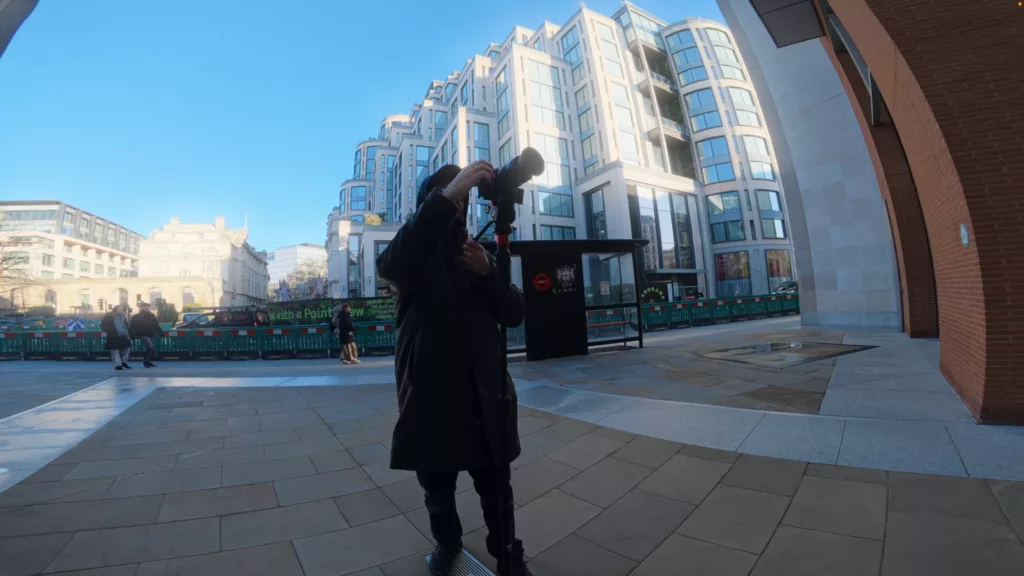
- Around St Paul’s, London: steps, crowds, wind, and constant re-framing.
Everything you saw in the street footage in the video was shot with no stabilisation in post. The smoothness comes from technique plus the head.
Key Features (and how they actually feel)
Touch Lifting System (Strike)
This is the headline feature. With the Strike mechanism you can raise or lower the camera in about a second, one-handed. No fiddling with tripod legs or knobs while the moment disappears.
It’s also great in a small studio: the small footprint lets you place the monopod almost anywhere, and then the lift system gets the camera to the exact height you need for the shot.
Wish list: I’d love the minimum height to go about 20–30 cm lower for true desk-level angles, but I can see why that’s a design challenge.
Modular & Convertible Design
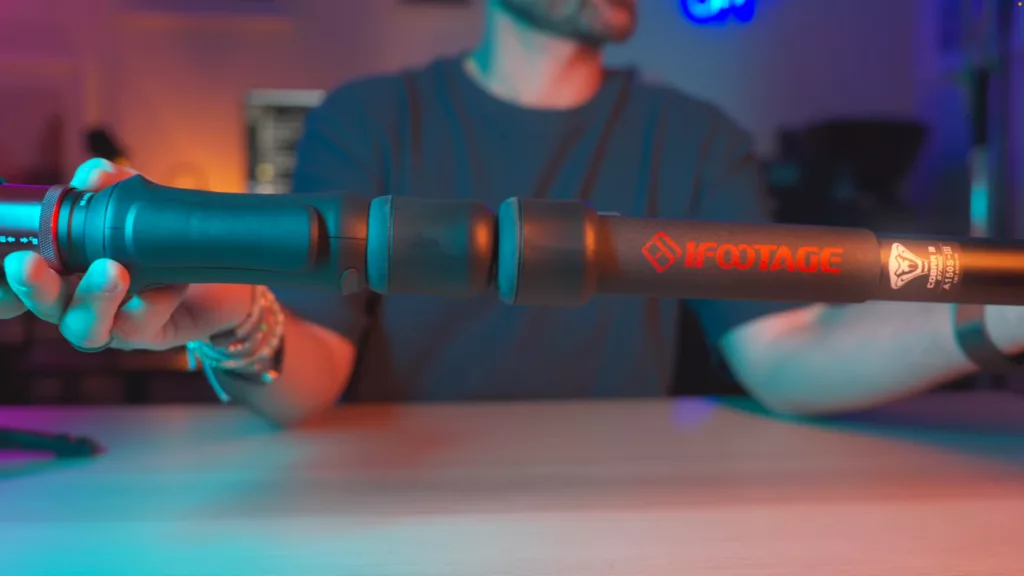
Modular sounds like marketing until you actually use it. Here it’s genuinely practical. You can break the setup down and reconfigure it depending on the shot: low angles, tighter spaces, or quick changes between positions.
This is one of the reasons it works well for creators. It adapts to your shooting scenario instead of forcing you into one setup.
Heavy-duty but still portable
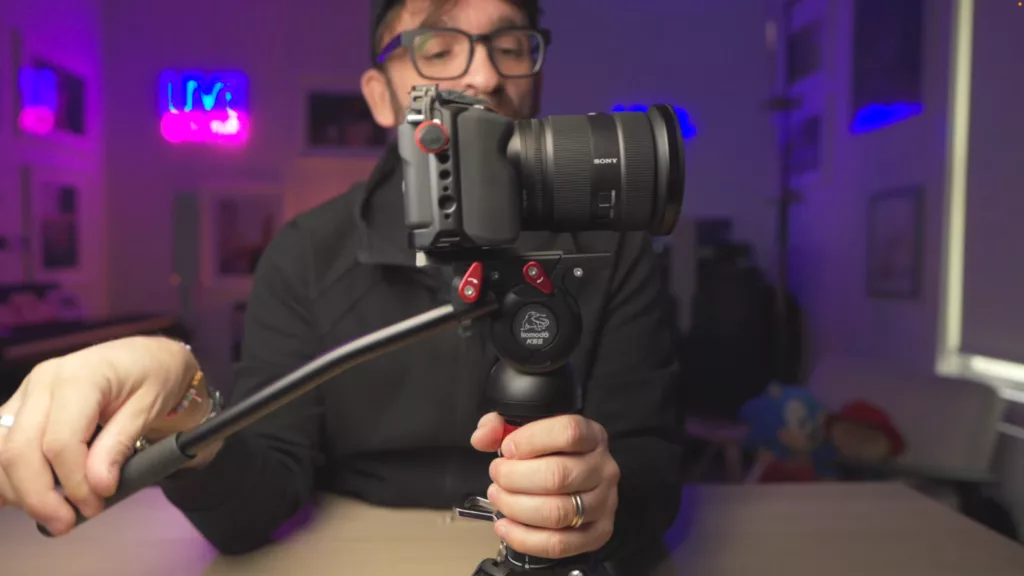
Build quality is excellent. The Cobra 3 Strike feels robust and well-made, with good tolerances and controls where your hand expects them.
Weight (real numbers)
People assume a monopod is always massively lighter. The truth is more nuanced:
- Cobra 3 monopod: 922g
- Base-P: 656g
- Cobra + Base-P: 1.578kg
- Komodo K5S head: 868g
- Full setup: ~2.446kg
My tripod (carbon fibre and magnesium) is 2.1kg without a head, so yes, the Cobra alone is much lighter, and even with Base-P it’s about half a kilo lighter than the tripod.
And honestly, half a kilo matters more than people think. If you’re carrying gear for hours, 500g isn’t a number, it’s shoulder fatigue.
But the bigger difference isn’t just weight.
The real win: workflow
With a tripod you’re constantly managing legs, footprint, space, and setup. With this, you can walk with the rig ready, find the next frame, drop it down, touch-lift the height, and you’re shooting in seconds.
360° Pan Base (Base-P)
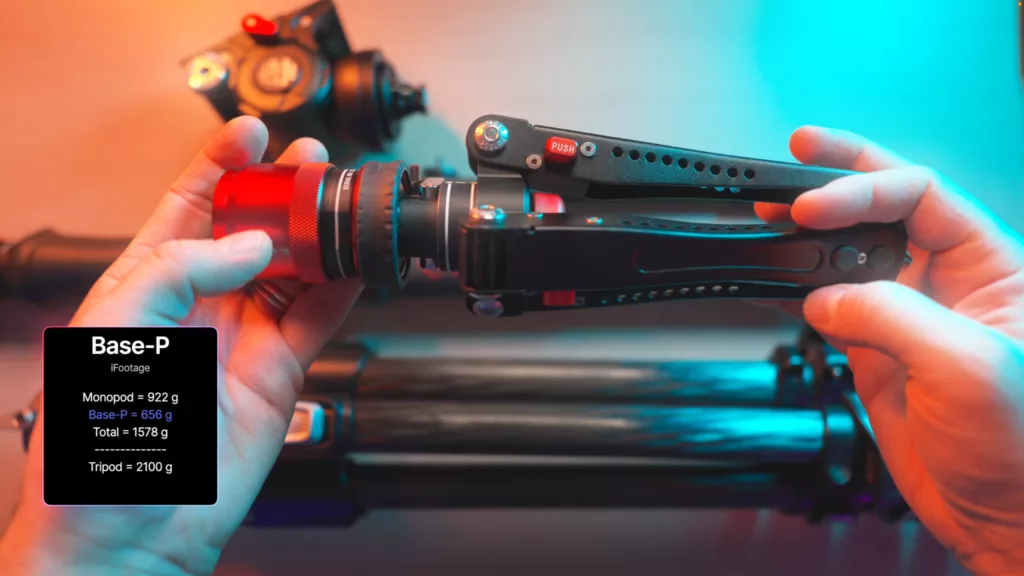
This base is what makes the Cobra 3 feel like more than “just a monopod”.
With the pedal, you unlock the base and you can add controlled movement straight away: smooth pans, micro push-ins, quick reframes without lifting the whole setup. It’s fast, and it keeps shots feeling intentional.
You can also adjust the leg angle, so you can go lower and flatter for more stability, or taller when you need clearance.
Nice detail: there’s also a tension wheel on the Base-P, so you can dial in how much resistance you want: looser for easier movement, tighter for more control.
Universal mounting option
Mounting is straightforward: standard threads, so you can use a proper fluid head, a ball head, mount the camera directly, or even add a small light.
If I want to go super portable, I can swap the fluid head for a small ball head and mount a light, and suddenly the whole setup becomes a compact run-and-gun rig.
Quick section on the Komodo K5S Fluid Head
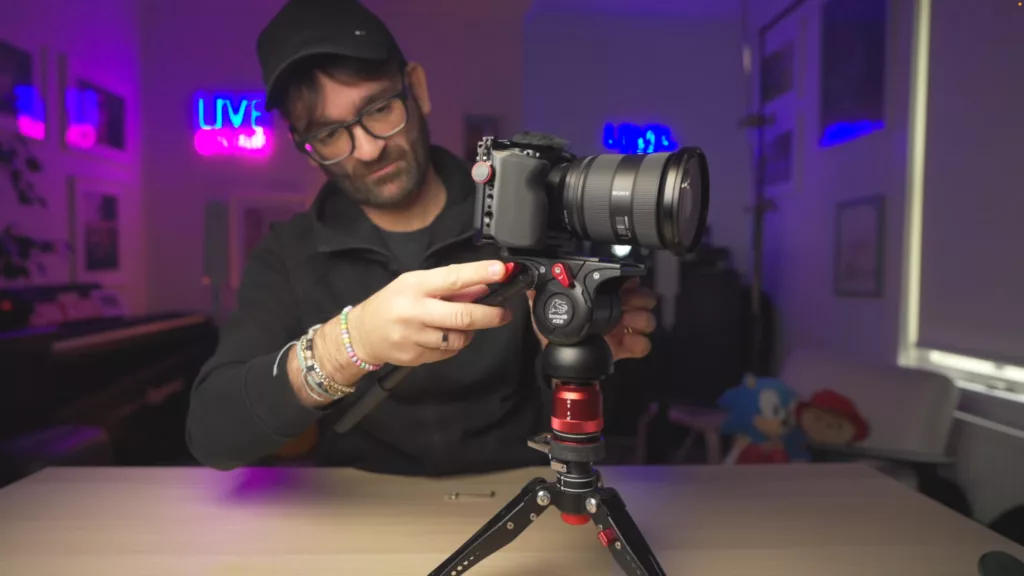
The Komodo K5S is where a lot of the “professional feel” comes from.
The monopod gives you speed and positioning. The fluid head gives you controlled pans and tilts that don’t look like handheld panic. Once you get the technique, you can get genuinely smooth footage without relying on post stabilisation.
Is it a cinema head? No. But for a monopod setup, it’s a very strong match.
Quirks & Improvements (short and honest)
I like this setup a lot, but a few things I’d love to see improved:
- Komodo head plate locking knob: it sits close to the camera, so tightening and loosening it can be fiddly on bigger rigs.
- Minimum height: I’d love the Cobra to go 20–30 cm lower for desk-level shots without reconfiguring anything.
- Plate screw: a fold-out handle (D-ring style) would let you tighten without needing a coin/tool.
- Accessory idea: a clip-on wheel/dolly attachment for the Base-P would be amazing for easy studio slides.
Final verdict: who is this for?
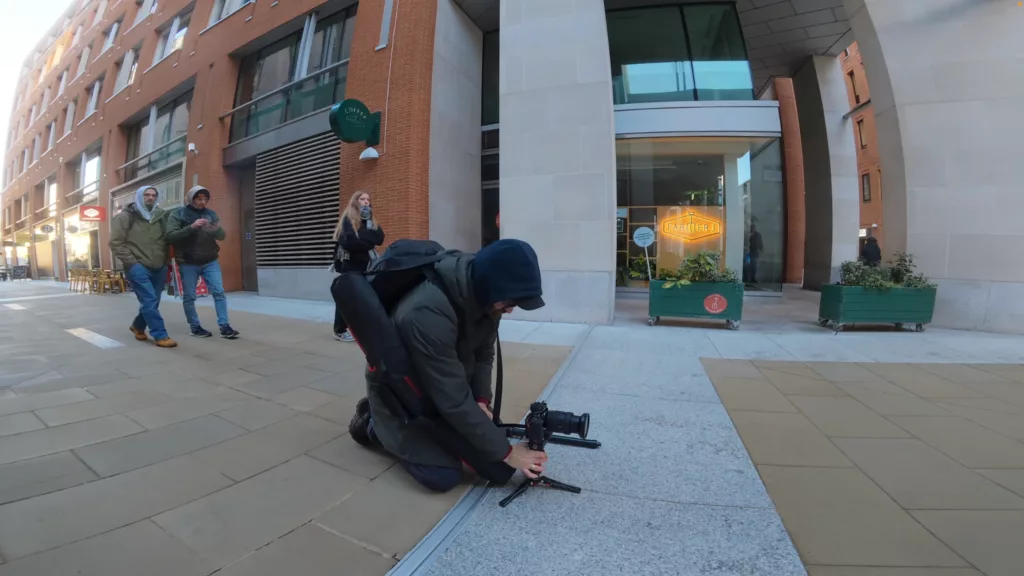
I genuinely like this monopod, and it has already changed my videography, especially in the studio.
When I’m out doing street photography, I’m not bringing it with me. If I’m shooting photos, I want to focus on photos. But after a good session, when I go out again to capture b-roll, the Cobra 3 makes a huge difference in video quality and in how tired I feel at the end.
Buy it if:
- You film solo and need fast angle/height changes
- You shoot in tight spaces and need a small footprint
- You want controlled movement without dragging a tripod everywhere
Skip it if:
- You need totally hands-off stability in all conditions
- You plan to leave the camera unattended outdoors, fully extended, in wind or crowds
Gear links
As an Amazon Associate I earn from qualifying purchases.
- 🐍 iFootage Cobra 3 Strike Monopod : https://amzn.to/49ZGBbC
- 🎛️ iFootage Komodo K5S Fluid Head: https://amzn.to/49Q0wcN